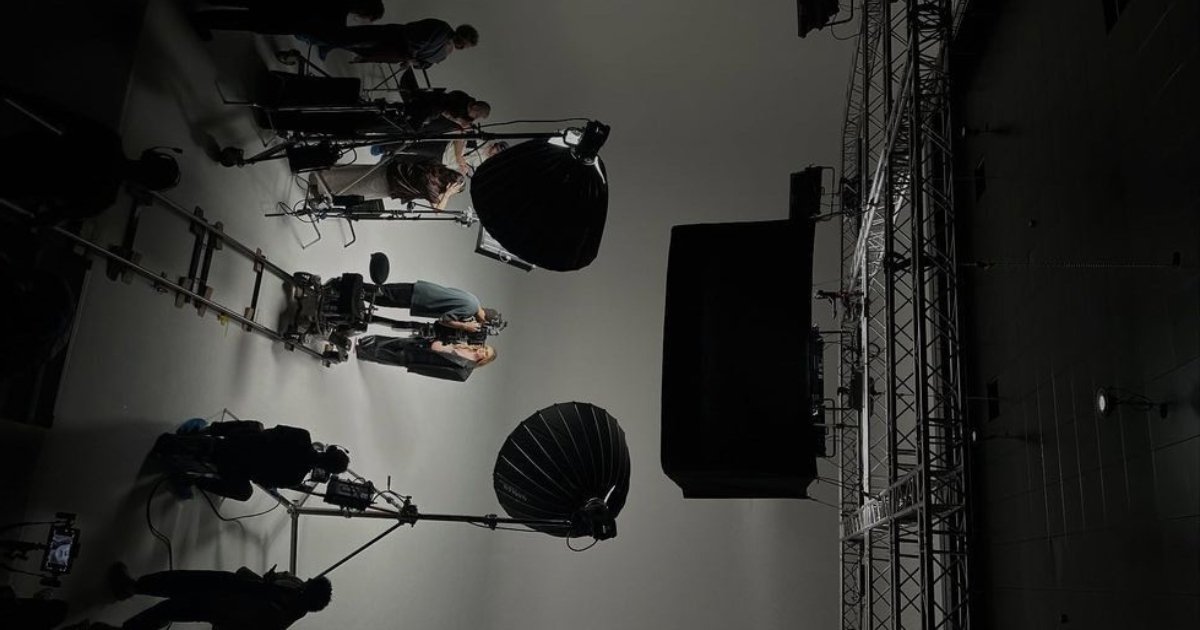
Why photo sessions remain central to brand identity
Fashion labels, irrespective of their scale or market position, still revolve around one core element: the photoshoot. It’s the juncture where every component coalesces — artistic direction, product conceptualization, talent selection, styling, and narrative crafting. If one disregards the clamor of digital platforms and performance marketing efforts, what endures is this: the shoot dictates a brand’s aesthetic and essence. It’s the point where identity becomes discernible.
Consider it akin to architectural design. A photoshoot serves as the master plan, not merely an embellishment. It establishes proportions, mood, and framework. Without it, everything else appears disjointed. This is precisely why brands continue to heavily invest in production. Even in an era captivated by velocity and reach, no reputable brand is prepared to jeopardize this fundamental bedrock. Its significance is simply too profound.
Furthermore, there’s a psychological dimension at play. Consumers don’t just acquire goods — they immerse themselves in a visual universe. A potent campaign can evoke aspiration, foster confidence, and instill recognition in a matter of moments. Such an impact is not coincidental. It stems from meticulous, premium-quality production. Eradicate that, and the brand’s cohesion dissipates.
Therefore, no, photoshoots are not fading away. If anything, they are assuming greater importance as steadfast anchors within an progressively fragmented content panorama. But here is where circumstances begin to shift: while the fundamental purpose of the shoot has remained constant, its surrounding ecosystem has undergone a profound transformation. And this evolution is revealing a void that brands can no longer overlook.
The sustained significance of campaign-driven storytelling
Campaigns have consistently operated as the narrative engine of fashion. Each one introduces a storyline — sometimes audacious and cinematic, sometimes understated and refined — but invariably purposeful. These narratives provide context to collections, aiding audiences in comprehending not merely what to wear, but its underlying relevance.
Traditionally, campaigns were conceived as holistic experiences. One would encounter them in magazines, on billboards, and within meticulously curated retail environments. Exposure was regulated, rollout was paced, and the lifecycle was relatively foreseeable. A campaign would launch, command attention for a period, and then progressively recede as its successor took its place.
That paradigm functioned flawlessly in a more sedate media landscape. However, today, storytelling doesn’t unfold in isolated bursts anymore. It’s perpetual. Consumers engage with brands across dozens of interaction points — Instagram, TikTok, product listings, email blasts, digital advertisements — all within a single day. And each of those touchpoints necessitates fresh, pertinent material.
This is where conventional campaign thinking begins to expose its limitations. A campaign may still narrate a compelling story, but it’s no longer adequate to sustain engagement over an extended period. It’s like releasing a blockbuster film and anticipating people to repeatedly watch the same scene for months. Eventually, no matter its brilliance, attention inevitably wanes.
The predicament, then, isn’t to abolish campaigns — but to reimagine how they operate within a broader, continuously active content framework. Instead of serving as ultimate conclusions, they need to evolve into initial catalysts.
Why contemporary channels demand unprecedented amounts
If you were to query most fashion departments about their foremost content challenge, they wouldn’t cite quality — they would state volume. Not because quality is inconsequential, but because the appetite for content has surged in ways that established production paradigms were not designed to accommodate.
Consider performance marketing as an illustration. Running advertisements today isn’t about deploying a singular creative asset and allowing it to run its course. It’s about incessant experimentation — diverse formats, varied messages, distinct visuals. Algorithms favor heterogeneity. The more one tests, the more insights one gains, and the better one’s outcomes become. But that only functions if there is a sufficient reservoir of content available for testing in the first place.
E-commerce recounts a comparable narrative. Product pages are no longer static inventories. They are dynamic, evolving spaces that must remain current to sustain conversion rates. Patrons anticipate seeing merchandise in distinct settings, from various angles, and in diverse applications. A mere one or two images simply do not suffice any longer.
Then there’s social media, which might well be the most exacting channel of all. Consistency is paramount. If one disappears, one is forgotten. If one reiterates, one is disregarded. The expectation isn’t merely to appear — it’s to appear with something novel, repeatedly.
Amalgamate all these factors, and the magnitude of the issue becomes apparent. It’s not about generating exceptional content — it’s about generating enough of it to uphold visibility across every crucial channel.
The discrepancy between output and expectation
Here’s the inherent tension: while content demand has escalated exponentially, production methodologies have largely remained unchanged. Brands still depend on a select few significant shoots annually, anticipating them to yield sufficient material to fuel months of activity.
That anticipation no longer holds true.
A typical shoot might generate a predetermined number of key images, a few variations, and some supplementary assets. It constitutes a robust output — but it’s finite. Once those assets are disseminated across ads, e-commerce, and social platforms, they rapidly begin to repeat. And repetition, in a rapidly moving digital milieu, leads to diminishing returns.
This is where creative lassitude starts to insinuate itself. Audiences cease to take notice. Performance metrics decline. Teams frantically endeavor to extend existing assets further, often jeopardizing quality or coherence in the process. It transforms into a reactive cycle rather than a proactive, strategic one.
The problem isn’t that the initial content is substandard. In fact, it’s frequently superb. The issue is that it was not conceived to function at the scale presently required. It’s akin to attempting to power a contemporary metropolis with infrastructure designed for a modest hamlet — it might operate for a period, but eventually, the imperfections become evident.
This discrepancy is what is precipitating the transition toward a novel methodology. Not more shoots, not reduced quality — but a more intelligent approach to amplify the inherent value of what has already been created.
Unpacking the period subsequent to an initial release
The inception of a campaign often carries a profound sense of achievement. On this pivotal day, the initiative is unveiled, its visual components disseminated across all accessible platforms, and a surge in audience interaction is observed — a culmination representing the return on extensive labor spanning weeks or even months. For a fleeting interval, an exquisite synergy manifests. The brand radiates prominence, coherence, and pertinent appeal.
Subsequently, with an almost deterministic regularity, the momentum begins to decelerate.
Those very images, which conveyed novelty upon their initial deployment, gradually permeate every corner of the digital landscape. Advertising efforts repurpose them. E-commerce listings depend on their presence. Social media updates reiterate their display. Initially, this repetition is scarcely perceptible. However, it soon transitions into overtness. And within a relatively short timeframe, the collective content portfolio starts to evoke a sense of excessive familiarity.
This phenomenon should not be misconstrued as an indictment of creative ingenuity; rather, it represents a constraint inherent in the availability of resources. There is, quite simply, an insufficient volume of distinct assets to sustain visual diversity across an extended duration. Consequently, organizations resort to compensatory measures: employing alternative cropping techniques, adapting presentation formats, or perhaps incorporating marginal alterations. Yet, such modifications are predominantly superficial. They fail to institute a foundational revitalization of the underlying content.
Concurrently, the digital ecosystems themselves are in perpetual flux. Algorithmic structures are predisposed to promoting freshness. Consumer bases exhibit a persistent yearning for innovation. Rival entities consistently unveil novel visual material. And abruptly, what previously commanded attention begins its recession into mere environmental noise.
Deciphering the dynamics of content exhaustion and efficacy erosion
The concept of ‘creative fatigue’ transcends mere industry jargon; it represents a quantifiable occurrence. Within the realm of performance marketing, for instance, it is a frequent observation that the efficacy of advertising campaigns diminishes substantially subsequent to recurrent audience exposure. Metrics such as click-through rates experience a downturn, audience interaction wanes, and the expenditure associated with customer acquisition escalates. Crucially, the intrinsic creative material itself remains unaltered — yet, the receptiveness of the target demographic undergoes a profound shift.
This effect stems from the innate human predisposition towards variability in attention. Upon encountering identical visual stimuli on a recurring basis, our cognitive faculties commence a process of selective attenuation. The visual element then assimilates into the ambient clutter, rather than retaining its capacity to command distinct notice.
For commercial entities, this scenario engenders an incessant imperative to rejuvenate their content portfolios. However, should this rejuvenation necessitate a fresh production shoot on each occasion, the underlying operational model rapidly devolves into unsustainability. Financial outlays experience an upward trajectory, project schedules become distended, and internal teams are subjected to excessive burdens.
Consequently, the pivotal inquiry materializes: how does one perpetually sustain novelty in creative output without the continuous reversion to the production phase?
It is at this juncture that the paradigm of ‘extension’ emerges — not merely as an expedient circumvention, but as a foundational reorientation in the conceptualization of content.
Transitioning from concluded deliverables to adaptable frameworks
Historically, visual content within the fashion industry has conventionally been regarded as an ultimate commodity. The established workflow involves the meticulous planning of a photoshoot, its subsequent execution, the post-production refinement of the resulting images, and their eventual dissemination. Upon the culmination of this sequential process, the creative endeavor is, in essence, deemed ‘finalized.’ The resultant assets are then rendered immutable, granted official endorsement, and propagated globally as definitive, completed artifacts.
Nevertheless, it is precisely this entrenched conceptual framework that is now undergoing a profound transformation.
The pioneering enterprises within the sector are increasingly moving beyond the perception of individual images as terminal outputs. Conversely, they are embracing them as initial launchpads — malleable substrata capable of progressive metamorphosis across temporal spans. This represents an understated yet utterly transformative paradigm shift. Rather than posing the inquiry, ‘What specific content have we generated?’ the prevailing question evolves into, ‘What inherent potential can this particular creation actualize?’
Envision this analogy: constructing with modular building blocks versus sculpting an enduring monument from stone. A conventional photography session yields an exquisitely chiseled sculpture — impeccable in its form, yet fundamentally unalterable. An extended methodology, conversely, furnishes a systematic collection of modular components that can be reconfigured, amplified, and customized contingent upon the specific operational context. The foundational artistic vision persists unimpaired, concurrently, its spectrum of practical applications experiences exponential growth.
This evolutionary redirection does not necessitate the renunciation of artistic skill. On the contrary, it serves to augment its intrinsic value. This is because when the underlying structural integrity is robust — when photographic illumination, aesthetic arrangement, and compositional balance have been meticulously deliberated — it significantly facilitates the expansion of that original body of work in a manner that retains its fundamental coherency. The initial photographic session establishes the governing parameters. All subsequent elaborations operate strictly within these predefined boundaries.
And therein lies the crucial insight: content extension is not synonymous with haphazard creation. It embodies a meticulously managed evolutionary process. Its essence resides in extracting augmented utility from an identical creative nucleus, without in any way diminishing the intrinsic qualities that initially endowed it with potency.
Reimagining the end-to-end trajectory of a photographic production
Should one delineate the conventional progression of a photoshoot, its duration proves remarkably constrained. The sequence typically comprises pre-production planning, the production phase itself, subsequent post-production activities, the official launch — and then an ensuing period of diminution. Following this, the visual assets are either consigned to archival storage or subjected to repetitive deployment until their utility is ultimately exhausted.
The methodology of extension profoundly elongates this operational lifecycle.
Rather than observing an abrupt zenith succeeded by a precipitous decline, one witnesses a more protracted trajectory — a curve within which the content perpetually undergoes refinement and preserves its pertinence across temporal horizons. Novel permutations are incrementally unveiled. Diverse presentation formats are investigated. The identical fundamental visual elements are recontextualized to suit disparate distribution channels and distinct target demographics.
This process consequently engenders a framework that bears a far greater resemblance to an organic, dynamic system than to a solitary, discrete occurrence.
And it is precisely at this juncture that a compelling synergy emerges: this elongated operational lifespan demonstrates a significantly enhanced congruence with the contemporary modalities through which consumers engage with commercial entities. Individuals do not absorb an entire campaign instantaneously. Rather, their interaction unfolds in discrete segments — an advertising impression here, a product-specific webpage there, a social media update subsequent to these. The principle of extension guarantees that each of these individual points of contact conveys a sense of novelty, even when their genesis lies in an identical initial photographic production.
Hence, rather than perpetually reinitiating the creative workflow, brands possess the capacity to accrue sustained impetus over time. The photographic endeavor thus transitions into the genesis of an ongoing narrative, rather than its conclusive resolution.
Amplifying creative deliverables without recourse to novel production engagements
Let us, for a moment, shift our focus to pragmatic considerations. What tangible manifestation does the concept of ‘extension’ assume once a photographic session has concluded?
Conventionally, a single photographic production might yield a collection of 10 to 15 impactful images — comprising primary hero visuals, several alternative compositions, and perhaps a selection of detailed close-ups. By adopting an extension-oriented paradigm, that identical initial shoot possesses the capability to produce 30, 40, or even in excess of 60 viable visual assets, all without necessitating a return to a physical production location.
The mechanism? Through the methodical augmentation of pre-existing visual components.
This process does not imply the indiscriminate manipulation of imagery or the application of superficial aesthetic overlays. Rather, it signifies the judicious generation of novel outputs that retain their fundamental congruence with the initial artistic vision. The overarching objective is to uphold visual coherence whilst simultaneously amplifying diversity.
The principal areas of concentration for brands generally encompass:
- Adjustments in cropping and spatial reframing to optimally conform to various digital platforms
- Modifications to environmental backdrops that inject novel contextual settings
- Refinements in illumination and chromatic tonality to effect nuanced alterations in atmospheric mood
- Revisions in compositional arrangements that accentuate distinct attributes of the featured product
Considered in isolation, these individual strategies might appear straightforward. Collectively, however, they contribute to the establishment of a considerably expansive visual repository — a resource capable of sustaining continuous content requirements without mandating repeated production cycles.
Furthermore, the ramifications are substantial. An increased volume of assets translates directly into greater operational adaptability. Enhanced flexibility, in turn, facilitates superior iterative testing, more precise audience segmentation, and ultimately, an augmented level of overall efficacy.
Enriching contexts, views, and tales
A pivotal advantage of visual augmentation is its capacity to transcend the confines of a single setting.
In conventional photoshoots, limitations are imposed by the chosen site. If operating within a studio, the atmosphere invariably reflects that environment. Should the shoot take place outdoors, the entire presentation mirrors that specific backdrop. However, with visual extension, a solitary product can inhabit a multitude of environments — be they urban, organic, minimalist, or editorial — without necessitating physical travel to each location.
This fundamentally unlocks entirely fresh avenues for narrative development.
Consider a handbag, for instance; its existence need not be restricted solely to the environment where it was initially captured. It can appear in diverse scenarios that resonate with varied demographics. One iteration might project an air of aspiration and high fashion. Another could convey a casual, everyday utility. Both stem from the identical core product, yet they address distinct instances of application.
Perspectives and arrangements are also capable of evolution. A central hero image can transform into an intimate close-up. A comprehensive, full-body representation can morph into a frame concentrating on fine points. Each distinct rendering adds layers of meaning to the storyline, furnishing consumers with more ways to connect with the offering.
The ultimate result is not merely an abundance of material, but a more profound story articulated across multiple dimensions.
Channels where enhanced imagery provides peak utility
Targeted Advertising, Online Retail, and Social Media.
If marketing initiatives serve as the focal point, these platforms function as the driving mechanism.
The majority of content today is not absorbed during a campaign’s debut; instead, it is consumed subsequently, throughout routine interactions. This is precisely where expanded visuals demonstrate their true value.
In the realm of performance marketing, diversity is paramount. Continually running the same advertisement leads to consumer fatigue, whereas introducing novel visuals sustains elevated engagement. With an extensive library of assets, brands can perpetually test and refine their strategies without an urgent need to procure new material.
Within e-commerce, novelty directly influences conversion rates. Updated product pages convey both relevance and meticulous attention to detail. When patrons encounter numerous premium-quality images depicting an item in varied settings, their confidence in their purchasing decisions substantially increases.
For social media, consistent posting boosts visibility. Algorithms favor profiles that share content regularly, yet this regularity does not imply mere repetition. Augmented visuals empower brands to uphold a continuous flow of content without compromising either its caliber or its internal coherence.
Across all three of these channels, the underlying trend is unmistakable: greater variation leads to enhanced results.
Why the majority of content lives beyond campaigns
It’s easy to overstate the importance of campaign launches because they are highly prominent. However, in reality, they constitute only a minor portion of a brand’s total content engagement.
The bulk of consumption occurs subtly — within user feeds, on product detail pages, and in advertisements that individuals quickly scroll past or interact with for just a few seconds.
It is at this point that visual expansion rebalances the equation.
Rather than concentrating all creative endeavor into one solitary event, brands disseminate it across an ongoing stream of content. The campaign still holds significance — it establishes the overarching tone — but the extended layer is what maintains sustained relevance.
Consider it akin to a popular musical track. Its initial release garners considerable notice, but its long-term triumph is ultimately determined by its enduring appeal for repeated listening. Augmented visual assets bestow this replay value upon brands.
Liberating operations from creative limitations
Each production inherently comes with its own set of limitations. You face restricted time on set, a predetermined financial allocation, and operational hurdles that shape what can be achieved. While these parameters are integral to the workflow, they simultaneously restrict the extent to which a concept can be developed.
Visual expansion serves to relax these boundaries.
When you are no longer reliant on physical production for every new iteration, you gain considerable adaptability. It becomes possible to explore ideas that were impractical during the original shoot. Content can be customized for diverse markets without orchestrating entirely fresh productions. Agility in reacting to emerging trends is enhanced, obviating the need to await subsequent campaign timelines.
This approach does not eliminate the necessity for foresight; rather, it redefines the locus of such planning. Instead of endeavoring to encompass every element within one singular photographic session, brands can concentrate on establishing a robust bedrock and subsequently building upon it.
Achieving widespread imaginative adaptability
There exists a common misunderstanding that expanding content output necessitates a compromise in creative expression. In actuality, the inverse scenario can often hold true.
When creative groups are unburdened by production-related strictures, they possess greater latitude for experimentation. They are free to trial diverse visual pathways, investigate novel arrangements, and finely adjust material for particular demographics — all unencumbered by the exigency of planning an additional session.
The result is a more nimble and responsive artistic methodology.
Rather than dedicating themselves to a single approach with fingers crossed for its success, brands are empowered to concurrently pursue numerous creative avenues. They can discern what connects, extract insights from it, and refine rapidly.
Furthermore, since all developments stem from the identical foundational shoot, the core brand identity maintains its integrity — even as the disseminated material undergoes transformation.
Upholding artistic authenticity while broadening deliverables
It is at this juncture that reservations frequently surface. A concern arises that expanding visual elements could potentially diminish the initial artistic concept — that it might convey an impression of economizing effort or lowering standards.
However, visual augmentation is not intended to supersede the primary production. Its purpose is to honor that foundation sufficiently to elaborate upon it.
The initial production continues to bear the principal burden. It delineates the visual style, establishes the overarching mood, and sets the benchmark. Augmentation merely guarantees that this foundational effort consistently provides worth well past its inaugural distribution.
Executed properly, this practice actually fortifies artistic authenticity, instead of undermining it.
Building a dual-tiered content framework
The resultant structure is a two-tiered framework:
- Tier 1: The Primary Capture
Superior production quality
Focused artistic guidance
Establishes brand identity
- Tier 2: The Supplemental Adaptation
Expandable permutations
Platform-tailored modifications
Ongoing content generation
This synergistic approach offers brands the optimal blend: extensive detail and broad reach, unwavering coherence and inherent adaptability.
Magnifying deliverables without amplifying manufacturing efforts
A primary benefit derived from extending content is its inherent efficiency. Rather than escalating the pace of new productions, organizations elevate the volume of deliverables originating from their current visual resources. This approach yields significant cost reductions, accelerates project schedules, and streamlines operational procedures.
Concurrently, an enhanced level of consistency is achieved. Given that all visual elements originate from a singular photography session, they intrinsically harmonize with the core essence of the brand. This eliminates the necessity of devising entirely new concepts for each individual content item.
Furthermore, oversight is amplified. Workgroups gain the ability to determine precisely when and how to unveil fresh iterations, dynamically adjusting their strategy based on live performance metrics and prevailing market demands.
The strategic edge for contemporary enterprises
Considering the operational framework, this methodology represents a transformative shift.
This lessens reliance on extensive, sporadic production events, substituting them with a more adaptable infrastructure. Groups are enabled to accelerate their pace, conduct more experiments, and react to shifts without encountering logistical impediments.
Within a fiercely competitive marketplace, such a degree of nimbleness is not merely advantageous — it is indispensable.
The trajectory of visual content frameworks in fashion
The concept of a “campaign” is undergoing transformation. Rather than denoting a singular, static instance, it is developing into an ongoing flow — a persistent succession of visual elements that evolve and expand across periods.
This progression gives rise to what might be termed an organic visual identity. It is an identity that remains fluid, perpetually renewed and re-envisioned across diverse settings and applications.
The enterprises destined for future success
The businesses that distinguish themselves will not invariably be those orchestrating the highest volume of photographic sessions.
Instead, they will be the ones adept at extracting the maximum utility from every single session.
These entities will grasp that in the present-day environment, the focus extends beyond merely generating exceptional content — it encompasses its persistent maintenance.
And this sustained viability is precisely what the process of visual extension facilitates.
Summary
Photographic sessions are not vanishing. They persist as the bedrock of fashion aesthetics, serving as the arena where brand essence is forged and artistic vision is established. However, sole dependence upon them is no longer sufficient.
The paradigm change is not centered on increasing quantity — it is about enhancing intelligence in production.
Through the practice of expanding visual assets beyond the original shooting event, brands unleash greater adaptability, broader diversity, and heightened pertinence across all critical communication avenues. Marketing campaigns cease to be discrete occurrences and begin to evolve into unbroken frameworks.
The outcome is straightforward yet impactful: a brand that does not diminish post-unveiling, but rather remains discernible, flexible, and vibrant.
Frequently asked questions
1. What precisely is implied by the term “extending a photoshoot”?
It signifies utilizing the primary resources from a photographic session to generate supplementary variations, contextual settings, and diverse formats, instead of exclusively depending on the initial set of deliverables.
2. Does the practice of expanding visuals lead to a diminished creative standard?
No. When executed with precision, it preserves the foundational artistic vision while simultaneously augmenting the quantity of deployable assets, thereby guaranteeing both excellence and broad applicability.
3. What is the realistic volume of assets that a single photographic endeavor can yield?
Whereas conventional photography sessions might result in 10–15 images, an expanded methodology has the potential to produce 30–60 or more visual items, contingent upon the subsequent elaboration of the content.
4. Why does this particular strategy hold significance for online retail and advertising?
This is due to the inherent demand of these channels for perpetual updates and diversified content. A greater abundance of visuals facilitates superior experimental analysis, fosters heightened user interaction, and contributes to enhanced conversion metrics.
5. Do photographic sessions retain their necessity within this operational paradigm?
Without question. Photoshoots continue to be indispensable for establishing the core identity of a brand. Visual extension merely constructs upon that foundational basis, rather than supplanting it entirely.